

December 1, 2025
The University of Tokyo Kavli Institute for the Physics and Mathematics of the Universe (Kavli IPMU, WPI)
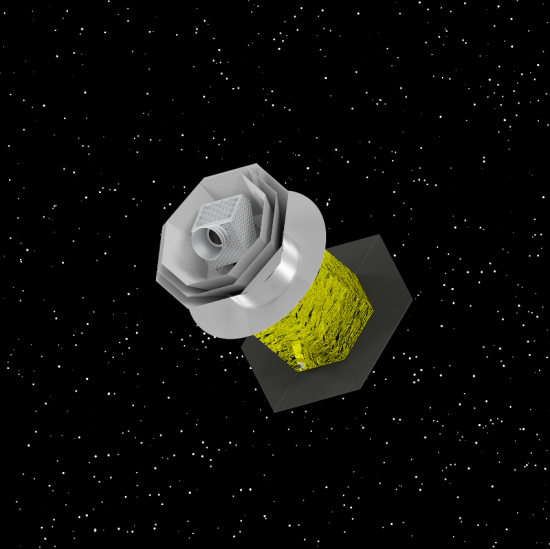
LiteBIRD, the next-generation cosmic microwave background (CMB) polarization satellite, has been approved to move forward, following a review at the Key Decision Point #2 (KDP2) meeting held at the Institute of Space and Astronautical Science (ISAS), JAXA, in September 2025.
Over the past year, the LiteBIRD team had been working to design a more feasible mission plan without compromising its scientific goals. The international collaboration will now accelerate its studies to prepare for the JAXA mission definition review, followed by entering Phase A (concept and technology development phase).
LiteBIRD is a space mission designed to explore one of the most profound questions in science: How did the universe begin? While past astronomical observations have established the Big Bang cosmology, what happened before the Big Bang remains unknown. The leading hypothesis is cosmic inflation, proposed by Professor Katsuhiko Sato and colleagues. LiteBIRD’s mission is to test this hypothesis and uncover its details.
A key player in establishing the Big Bang theory was the CMB — the afterglow of the Big Bang, observable uniformly in all directions of the universe. Tiny fluctuations in the CMB’s brightness and polarization have enabled scientists to study the state of the early universe precisely. But what about the universe before the CMB formed?
Before the CMB was emitted, the universe was in a plasma state, meaning it was opaque to light. However, the primordial gravitational waves generated during inflation may have left a faint signature in the polarization pattern of the CMB, known as the B-mode polarization. Detecting this signal is the key objective of LiteBIRD, providing a direct test of inflationary theory.
LiteBIRD will carry a wide-field millimeter-wave polarization telescope and conduct a three-year observation campaign. It will use approximately 4,000 superconducting detectors, and its telescope optics will be cooled to 5 Kelvin to reduce thermal noise and achieve high sensitivity. Observations will be conducted across 12 frequency bands, enabling the team to distinguish between the CMB signal and polarized emissions from our Milky Way.
In October 2024, the University of Tokyo Kavli Institute for the Physics and Mathematics of the Universe Associate Professor Tomotake Matsumura assumed the role of Principal Investigator (PI), and Okayama University Professor Hirokazu Ishino became Deputy PI. The Science Ground Segment Taskforce, preparing for scientific data analysis, is co-chaired by Kavli IPMU Project Associate Professor and Center for Data-Driven Discovery Director Jia Liu.
Under JAXA's leadership, the LiteBIRD mission is being developed in collaboration with space agencies and research institutes in Europe and North America. In Japan, Okayama University and other institutions are contributing to the satellite’s development. The mission is aiming for a launch in the 2030s.
Kavli IPMU will continue to serve as an international hub for scientific discovery, advancing instrument development, and, together with CD3, working toward the realization of a simulation and data analysis center to maximize scientific output from LiteBIRD.
LiteBIRD members from Kavli IPMU have made significant contributions. Associate Professor Guillaume Patanchon at Université Paris Cité Associate Professor, who is also an ILANCE and Kavli IPMU Visiting Scientist, and Kavli IPMU postdoc, Dr. Clément Leloup, Dr. Marta Monelli, and Dr. Guillermo Pascual Cisneros have advanced requirement analyses and systematic error assessments. Graduate students from the University of Tokyo Department of Physics, including Kosuke Aizawa, Ryosuke Akizawa, Takumi Izawa, and Taisei Iwagaki, have contributed to polarization modulator development. The Kavli IPMU's affiliate members, Dr. Tommaso Ghigna and Dr. Yuji Chinone (KEK), have also played vital roles in detector and algorithm development under the boundary conditions.

Related links
LiteBIRD website (ISAS/JAXA)