

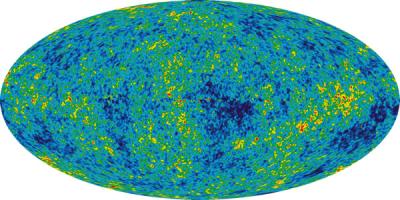
The Big Bang theory is based on Einstein’s theory of relativity and has been established on the basis of observational facts such as the expansion of the Universe, Big Bang nucleosynthesis (BBN), and the cosmic microwave background (CMB). It has successfully described the evolution of the Universe from approximately one second after its birth onward.
Inflationary cosmology describes an even earlier stage of the Universe. Shortly after the birth of the Universe, the potential energy of a scalar field called the inflaton dominated the Universe and drove an exponential expansion. The subsequent reheating then produced the hot Universe described by the Big Bang theory. Inflationary cosmology resolves theoretical problems that arise when the Big Bang theory is extrapolated back to the very early Universe, such as the horizon and flatness problems, while at the same time generating curvature and density perturbations from quantum fluctuations of the inflaton field. These perturbations are characterized by being adiabatic, nearly scale-invariant, and Gaussian, and they provide the most important observational probes of the inflationary Universe. Inflation also predicts the generation of primordial gravitational waves.
The density perturbations generated during inflation have been studied in detail through observations of CMB temperature anisotropies, galaxy surveys, and other cosmological observations. These observations have shown that the basic predictions of inflation are largely consistent with observations, and increasingly precise measurements are now enabling more stringent tests of inflationary models. On the other hand, the primordial gravitational waves predicted by inflation have not yet been detected, but their discovery is anticipated through future observations of CMB polarization and direct gravitational-wave searches.
Advances in observations have led to broad acceptance of the theoretical framework of inflationary cosmology. Nevertheless, the nature of the inflaton field responsible for inflation remains unknown. It is also possible that multiple fields were involved in inflation, in which case isocurvature perturbations and non-Gaussianity may be generated. Furthermore, large density perturbations may be generated on small scales, leading to the formation of primordial black holes. Many other questions also remain open, including how the reheating process after inflation takes place.
In the inflationary Universe, almost all of the matter and radiation that constitute the Universe are produced through reheating after inflation. Dark matter and the matter–antimatter asymmetry of the Universe are therefore also thought to have been generated after inflation, and their origins remain major mysteries in cosmology. Furthermore, these questions are closely related to particle physics beyond the Standard Model. Thus, many important questions concerning the inflationary Universe remain unresolved, and our research aims to elucidate them.
(Last update: 2026/09/10)
Members
- Shunsuke Adachi
- Robert Brandenberger
- Christian Capanelli
- Tomohiro Fujita
- Yannis Georis
- Tommaso Ghigna
- Rodrigo Gonzalez Quaglia
- Elisa Gouvea Mauricio Ferreira
- Masashi Hazumi
- Anamaria Hell
- Yiwen Huang
- Masahiro Ibe
- Hirokazu Ishino
- Baptiste Jost
- Masahiro Kawasaki
- Ryuichiro Kitano
- Takeshi Kobayashi
- Kazunori Kohri
- Eiichiro Komatsu
- Kazuya Koyama
- Alexander Kusenko
- Tomotake Matsumura
- Rieko Momose
- Marta Monelli
- Shinji Mukohyama
- Hitoshi Murayama
- Toshiya Namikawa
- Yasunori Nomura
- Ippei Obata
- Shi Pi
- Yuki Sakurai
- Misao Sasaki
- Katsuhiko Sato
- Kai Schmitz
- Satoshi Shirai
- Salvatore Sirletti
- Xue Song
- Yoshinori Sueno
- Aritoki Suzuki
- Masahiro Takada
- Volodymyr Takhistov
- Victoria Venken
- Taizan Watari
- Tsutomu Yanagida
- Vicharit Yingcharoenrat
- Jun'ichi Yokoyama