
13 April 2026
The University of Tokyo Kavli Institute for the Physics and Mathematics of the Universe (Kavli IPMU, WPI)
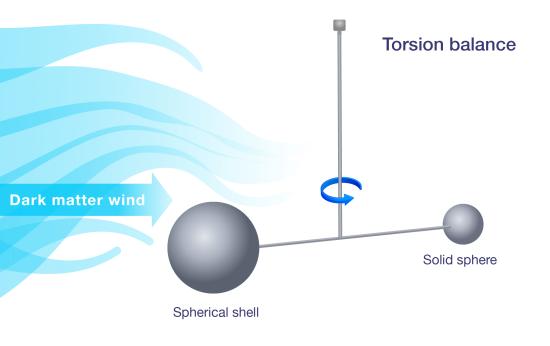
An international team of researchers has found that torsion-balance experiments — precision instruments originally built to test the equivalence principle — can double as detectors for very light dark matter, reports a study published in Physical Review Letters.
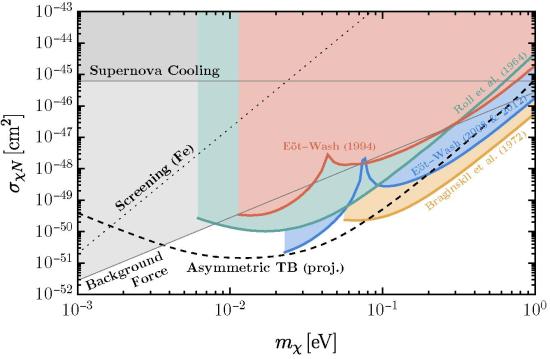
The study provides the strongest direct detection limits to date on interactions between dark matter and nucleons in this mass range from about 0.01 to 1 eV.
Dark matter is believed to make up a large fraction of the matter in the universe, yet its true nature remains unknown. Most past experiments have focused on heavier dark matter candidates, while much lighter dark matter, with masses closer to the mass of a neutrino, has been difficult to detect directly because its scattering signals are extremely weak.
A team of researchers, including The University of Tokyo Kavli Institute for the Physics and Mathematics of the Universe (Kavli IPMU, WPI) Professor Shigeki Matsumoto and Kavli IPMU Todai Postdoctoral Research Fellow and JSPS Fellow Jie Sheng, focused on one key physical effect: when dark matter is sufficiently light, its number density in a galaxy becomes very high, and its scattering cross section with macroscopic objects can also be greatly enhanced by coherent effects.
Repeated scattering of dark matter off the test masses in an experimental apparatus induced a tiny but measurable acceleration.
The team further showed that torsion-balance experiments with geometrically asymmetric configurations are especially sensitive to such dark-matter-induced accelerations. Based on a systematic analysis of several state-of-the-art torsion balance experiments, they found that instruments originally built to test the equivalence principle can also be used to constrain interactions between light dark matter and nucleons, and in the mass range from about 0.01 to 1 eV.
This result shows that precision measurement experiments can play a new role in the search for dark matter.
Particularly in the low-mass region where conventional underground detectors have limited sensitivity, torsion balance experiments can offer a new and complementary approach for the detection of light dark matter. With further improvements in experimental sensitivity and design, this method may extend the accessible range of dark matter masses and couplings even further, and strengthen the connection between precision experiments and particle cosmology.
The team’s study was published in Physical Review Letters on 26 March.
Paper details
Journal: Physical Review Letters
Paper title: Torsion Balance Experiments Enable Direct Detection of Sub-eV Dark Matter
Authors: Shigeki Matsumoto (1), Jie Sheng (1, 2), Chuan-Yang Xing (3), and Lin Zhu (4)
Author affiliations:
1 Kavli IPMU (WPI), UTIAS, University of Tokyo, Kashiwa, 277-8583, Japan
2 Tsung-Dao Lee Institute, Shanghai Jiao Tong University, 201210, China
3 College of Science, China University of Petroleum (East China), Qingdao 266580, China
4 National Gravitation Laboratory, MOE Key Laboratory of Fundamental Physical Quantities Measurement & Hubei Key Laboratory of Gravitation and Quantum Physics, School of Physics, Huazhong University of Science and Technology, Wuhan 430074, People’s Republic of China
DOI: 10.1103/8lbh-lblh (published 26 March 2026)
Paper abstract (Physical Review Letters)
Pre-print (arXiv.org)
Research Contact
Shigeki Matsumoto
Professor
The University of Tokyo Kavli Institute for the Physics and Mathematics of the Universe (Kavli IPMU, WPI)
E-mail: shigeki.matsumoto_at_ipmu.jp
* Please change _at_ to @
Media Contact
Motoko Kakubayashi
Press officer
The University of Tokyo Kavli Institute for the Physics and Mathematics of the Universe (Kavli IPMU, WPI)
E-mail: press_at_ipmu.jp
* Please convert _a_ to @
Related links
“Detecting meV-scale dark matter via coherent scattering with an asymmetric torsion balance” (Physical Review D, published 14 October, 2025)