
May 19, 2026
The University of Tokyo Kavli Institute for the Physics and Mathematics of the Universe (Kavli IPMU, WPI)
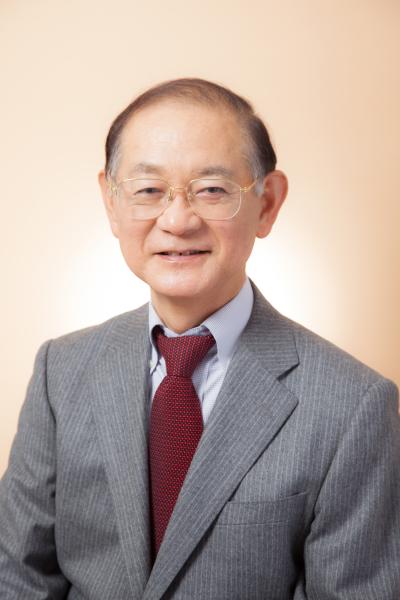
Ken’ichi Nomoto, the University of Tokyo Emeritus Professor and Kavli Institute for the Physics and Mathematics of the Universe (Kavli IPMU, WPI) Visiting Senior Scientist, has been named one of three recipients of the 2026 Gruber Cosmology Prize for his research on supernovae, announced the Gruber Foundation today.
Established in 2000 by the Gruber Foundation, the annual Gruber International Prize Program honors individuals in the fields of Cosmology, Genetics and Neuroscience, whose groundbreaking work provides new models that inspire and enable fundamental shifts in knowledge and culture. The Selection Advisory Boards choose individuals whose contributions in their respective fields advance our knowledge and potentially have a profound impact on our lives.
Nomoto, the first Japanese researcher to receive this award, is being recognized in this year’s award together with University of California, Berkeley, Distinguished Professor of Astronomy Alexei V. Filippenko, and University of California, Santa Cruz, Professor Stanford Woosley. The Gruber Prize citation says, Filippenko, Nomoto, and Woosley’s “trail-blazing work links stellar evolution, explosive nucleosynthesis, the origin of heavy elements, and the chemical evolution of the Universe, and supports the use of supernovae for precision cosmology.”
The three recipients have studied supernovae through complementary approaches, Filippenko as an observer and Nomoto and Woosley as theorists. Their work has fundamentally influenced cosmology in multiple ways, including Nomoto’s contributions to supernova models and nucleosynthesis.
Nomoto and Woosley independently worked on models of both Type Ia and Type II supernovae. In their Type Ia models, they found that the rate at which a white dwarf accretes mass from a companion star will determine the nature of its thermonuclear demise. In their Type II models, they predicted the precise measures of the properties of those catastrophic events—luminosity, chemical composition, temperature—as well as what those events leave behind—neutron stars and black holes. They found that some of these events could even produce the most energetic phenomena in the Universe, gamma ray bursts, and that the accompanying supernovae would so luminous and energetic as to be worthy of a new designation: hypernovae.
Regarding nucleosynthesis, Nomoto and Woosley calculated just how much of each element the various masses and kinds of supernovae made and showed that the total agreed with what we see in the Sun and other stars. In so doing Nomoto and Woosley turned the study of supernovae into a predictive science.
Filippenko, Nomoto, and Woosley will evenly divide the $500,000 award, which they will receive on November 10 at the “Illuminating the Cosmos” conference at the Max Planck Institute for Astronomy and House of Astronomy in Heidelberg, Germany.
About Ken’ichi Nomoto
Education and Experience
1974 PhD in Astronomy, The University of Tokyo
1974 Postdoctoral Research Fellow, Japan Society for the Promotion of Science
1976 Assistant Professor, Department of Physics, Ibaraki University
1982 Assistant Professor, Department of General Systems Studies, College of Arts and Sciences, The University of Tokyo
1985 Associate Professor, Department of Earth Science and Astronomy, College of Arts and Sciences, The University of Tokyo
1989 Associate Professor, Department of Astronomy, Graduate School of Science, The University of Tokyo
1993 Professor, Department of Astronomy, Graduate School of Science, The University of Tokyo
2008 - 2017 Project Professor and Principal Investigator, Kavli Institute for the Physics and Mathematics of the Universe (Kavli, WPI), The University of Tokyo
2014 - 2017 Hamamatsu Professor in the endowed research unit: Dark Side of the Universe
2010- Professor Emeritus, The University of Tokyo
2017- Visiting Senior Scientist, Kavli Institute for the Physics and Mathematics of the Universe (Kavli IPMU, WPI), The University of Tokyo
Awards
1989 Nishina Memorial Prize
1995 Japan Academy Prize
2010 IAP (Institut d'Astrophysique de Paris) Medal
2015 Marcel Grossman Award
2019 Hans A. Bethe Prize (American Physical Society)
2020 The Order of the Sacred Treasure
Related links
2026 Gruber Cosmology Prize Press Release