
June 2, 2026
The University of Tokyo Kavli Institute for the Physics and Mathematics of the Universe (Kavli IPMU, WPI)
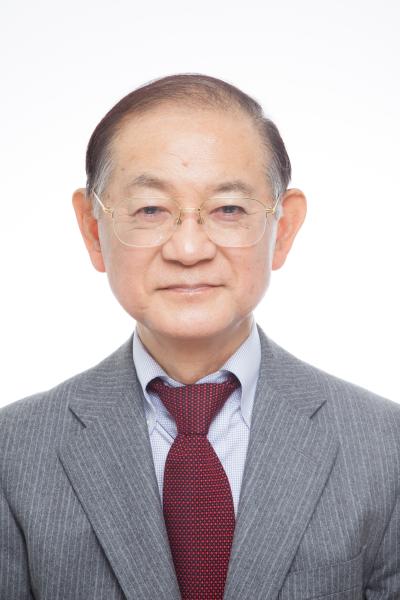
Ken’ichi Nomoto, the University of Tokyo Emeritus Professor and Kavli Institute for the Physics and Mathematics of the Universe (Kavli IPMU, WPI) Visiting Senior Scientist, has been named a recipient of the Shaw Prize in Astronomy 2026, it was announced on May 27 by The Shaw Prize Foundation.
He is the first Japanese researcher to receive this prize. Last month, Nomoto was also named the first Japanese researcher to be awarded the 2026 Gruber Cosmology Prize, thus receiving two international prizes in the same year.
The Shaw Prize was established in 2002 under the vision of businessman and philanthropist Run Run Shaw. It is an international award honoring individuals who are currently active in their respective fields who have made outstanding contributions in academic and scientific research or applications. The award is dedicated to furthering societal progress, enhancing quality of life, and enriching humanity's spiritual civilization. The prize is awarded in Astronomy, Life Science and Medicine, and Mathematical Sciences annually by The Shaw Prize Foundation.
This year, Nomoto is being recognized along with his fellow recipient, University of California, Santa Cruz, Professor of Astronomy and Astrophysics Stanford Woosley, for their “fundamental contributions to our understanding of the diversity and the key observational signatures of the spectacular stellar explosions, supernovae, and the origin of the chemical elements found in today’s universe.”
Nomoto and Woosley, and their collaborators, have deepened our understanding of the final phases of stellar evolution, the observational signatures and varied origins of supernovae and other explosive stellar phenomena, and the nucleosynthetic processes through which new chemical elements are made. Their theoretical models, particularly of light curves and nucleosynthesis, have guided observational studies, serving as an essential interpretive framework for researchers worldwide. Both researchers have worked largely independently, but their work has often been complementary.
Nomoto and Woosley produced the standard models for thermonuclear supernovae caused by accretion of matter onto a white dwarf from a companion star. Their careful studies of nuclear burning in the star combined with detailed nuclear reaction networks allowed predictions of the production of chemical elements from the explosion. They used these predictions to carry out the first comprehensive galactic chemical evolution calculations, which are widely used to understand the origin of the chemical elements through the record of the chemical composition of stars and to identify the earliest generations of stars.
Both researchers pioneered calculations that track the evolution of massive stars from their birth to core collapse, and predicting the large number of supernovae types such as electron-capture supernovae, hypernovae, superluminous supernovae, stripped-envelope supernovae, and pair-instability supernovae.
Some core-collapse supernovae give rise to brief, intense bursts of gamma rays bright enough to be visible across the universe. In Woosley’s model of such gamma-ray bursts, the stellar collapse leads to a black hole or neutron star surrounded by a rapidly rotating accretion disk and collimated relativistic jets punching through the star’s envelope. Nomoto’s calculations of nucleosynthesis and explosions with various amount of energy deposition helped confirm that such hypernovae could release energies far larger than normal supernovae.
About Ken’ichi Nomoto
Education and Experience
1974 PhD in Astronomy, The University of Tokyo
1974 Postdoctoral Research Fellow, Japan Society for the Promotion of Science
1976 Assistant Professor, Department of Physics, Ibaraki University
1982 Assistant Professor, Department of General Systems Studies, College of Arts and Sciences, The University of Tokyo
1985 Associate Professor, Department of Earth Science and Astronomy, College of Arts and Sciences, The University of Tokyo
1989 Associate Professor, Department of Astronomy, Graduate School of Science, The University of Tokyo
1993 Professor, Department of Astronomy, Graduate School of Science, The University of Tokyo
2008 - 2017 Project Professor and Principal Investigator, Kavli Institute for the Physics and Mathematics of the Universe (Kavli, WPI), The University of Tokyo
2014 - 2017 Hamamatsu Professor in the endowed research unit: Dark Side of the Universe
2010- Professor Emeritus, The University of Tokyo
2017- Visiting Senior Scientist, Kavli Institute for the Physics and Mathematics of the Universe (Kavli IPMU, WPI), The University of Tokyo
Awards
1989 Nishina Memorial Prize
1995 Japan Academy Prize
2010 IAP (Institut d'Astrophysique de Paris) Medal
2015 Marcel Grossman Award
2019 Hans A. Bethe Prize (American Physical Society)
2020 The Order of the Sacred Treasure
2026 Gruber Cosmology Prize
Related links
About the Shaw Prize in Astronomy
Related articles
Kavli IPMU Visiting Senior Scientist Ken’ichi Nomoto awarded the Gruber Cosmology Prize (May 19, 2026)