

August 7, 2026
The University of Tokyo Kavli Institute for the Physics and Mathematics of the Universe (Kavli IPMU, WPI)
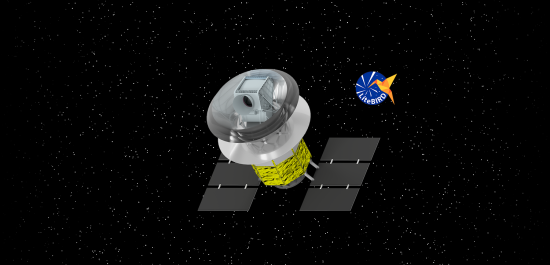
The JAXA-led next-generation cosmic microwave background (CMB) polarization satellite LiteBIRD has successfully passed Mission Definition Review #2.
LiteBIRD is an international project whose primary goal is to verify inflation, which is believed to have occurred before the Big Bang. With the help of world-class polarization observation precision techniques, the mission aims to identify B-mode polarization, also known as traces of primordial gravitational waves. This research is expected to produce results that can contribute to a wide range of scientific results including cosmology, particle physics, and astrophysics.
The Mission Definition Review #2 looked over the mission’s scientific objectives, system configuration, development plan, and international cooperation framework. Passing this review marks an important milestone in refining the LiteBIRD mission concept and development plan. Now, the team will continue to study the satellite system, observation instruments, scientific data analysis infrastructure, and international joint development framework while proceeding with the prescribed procedures for transitioning to the project preparation phase (Phase A).
“I am delighted that the entire LiteBIRD team has reached this important milestone together. While many challenges still lie ahead, they also bring exciting opportunities for new scientific discoveries. Leveraging Kavli IPMU's international research environment, we will continue working closely with our partners in Japan and around the world to maximize LiteBIRD's scientific outcomes,” LiteBIRD Project Principal Investigator and Kavli IPMU Associate Professor Tomotake Matsumura said.

Currently, numerous research institutions in Japan, Europe and North America are part of LiteBIRD. Passing this mission definition review is the result of several years of effort by researchers, engineers, and related organizations from these countries. The project will continue to work with partners around the world to advance its quest to uncover the origin of the universe.
The University of Tokyo Kavli Institute for the Physics and Mathematics of the Universe (Kavli IPMU, WPI) will contribute to LiteBIRD as a core hub, producing scientific results during the project’s preparatory phase (Phase A), and will drive international collaborative research. Within the Science Ground Segment (SGS), which links observational data obtained from the satellite to scientific results, Kavli IPMU will lead the development of data analysis infrastructure and analysis pipelines and establish a scientific analysis framework with research institutions in Japan and around the world.
Furthermore, Kavli IPMU will collaborate with JAXA on instrument development of a polarization modulator - a project led by Sapienza University of Rome, and with support from the Italian Space Agency (ASI). The institute will also promote joint research and technical expertise from these collaborations. In addition, Kavli IPMU will further expand its contributions to LiteBIRD across a wide range of fields, including instrument development, scientific data analysis, simulation and cosmological analysis, and lead scientific results of the highest global standard.

Related link
LiteBIRD Successfully Passed Mission Definition Review #2, Advancing to Phase A (Institute of Space and Astronautical Science, Japan Aerospace Exploration Agency website)
Related article
LiteBIRD Mission Takes One Step Forward (December 1, 2025)